June 25, 2026 • 4 min
The Embarrassing Dinner That Changed Consumer Finance Forever

Matthew Magnus
Creative Producer

Rick Chen
Spokesperson
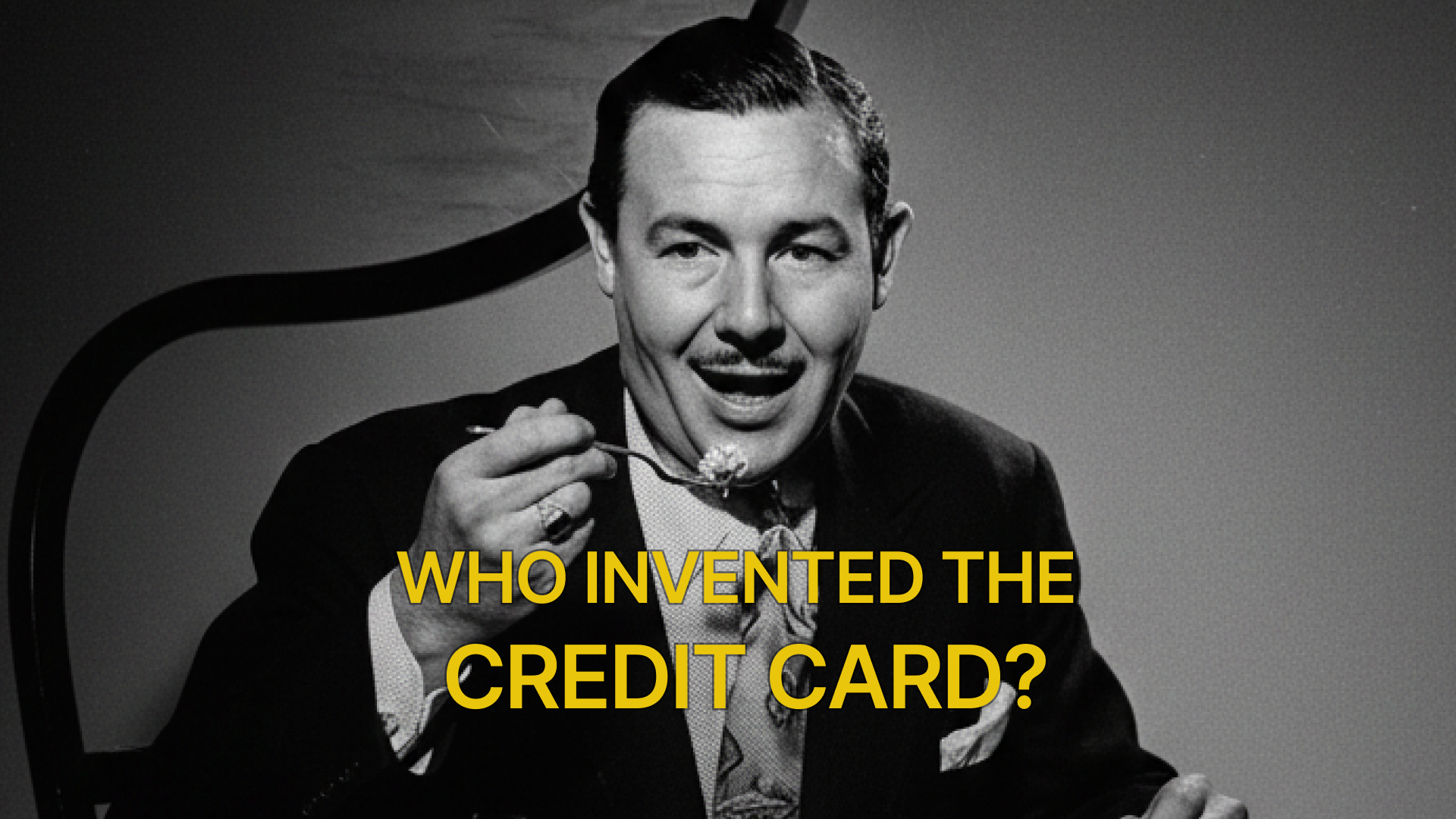
Credit cards are everywhere today, but that wasn’t always the case.
The history of credit cards begins in 1949. A businessman named Frank McNamara forgot his wallet at a business dinner in New York City and couldn’t pay the bill. The embarrassing moment led him to ask: Why did people need to carry cash at all?
Within a year, McNamara launched Diners Club, a charge card accepted at participating restaurants that allowed diners to buy now and pay later. It was a simple concept, but it laid the foundation for a multi-trillion-dollar industry. Now, credit card companies process trillions of dollars in purchases and transactions worldwide every year.
In this episode of “Footnotes of Finance,” Aven looks at how one embarrassing dinner changed consumer finance forever.
Who invented the credit card?
Frank McNamara, the founder of the Diners Club charge card, is widely credited with inventing the first modern charge card. The concept would eventually become the credit card.
What was the first credit card?
The Diners Club card is generally considered the first modern charge card. Introduced in 1950, it allowed cardholders to pay for meals at participating restaurants and settle the bills at the end of the month.
Why were credit cards invented?
Credit cards were created to make payments more convenient. The original idea came from Frank McNamara, who wanted a way to pay at restaurants, even if you did not have cash to pay for the meal.
How did the first credit cards work?
The original Diners Club was a cardboard card. Cardholders could dine at participating restaurants and use it to pay for their meals without cash. The restaurant recorded the customer’s account and bill manually and sent the information to Diners Club, which billed customers at the end of the month.
What is the difference between a charge card and a credit card?
A charge card generally requires someone to pay back the entire balance in full every month.
A credit card allows someone to carry a balance over time and may charge interest on the unpaid balance.
How do credit cards work?
Consumers use credit cards to make purchases. When a credit card is used, the credit card issuer pays the merchant on behalf of the cardholder. The cardholder then repays the credit card issuer according to the terms of the account.
Why are credit cards important?
Credit cards made it easier for consumers to borrow and spend money. They also simplified transactions between customers and merchants.
Notably, credit cards also helped establish the infrastructure for electronic payments, consumer lending and global commerce.
Watch the full video: The Embarrassing Dinner That Changed Consumer Finance Forever
“Footnotes of Finance” explores the inner workings of the consumer finance industry. Every financial product has an origin story, and Aven breaks down the real story of how things work.

Video transcript: The Embarrassing Dinner That Changed Consumer Finance Forever
What if I told you that the multi-trillion-dollar credit card industry that we have today exists because one man forgot his wallet at a dinner over 70 years ago?
It sounds crazy, but it’s completely true. Here’s how it happened.
The year is 1949. In New York City, Frank McNamara is wrapping up a business dinner at a restaurant called Major’s Cabin Grill. He reaches for his wallet, and it’s not there. He left it at home. In front of his colleagues, his clients, the entire table, he has nothing.
He has to call his wife to drive into the city and bail him out with cash. But that embarrassment stays with him, and on the drive home, he starts to ask a question that nobody really asked before.
Why do I even have to carry cash at all?
Within a year, McNamara launched the Diners Club card, a small cardboard card. You would hand it to the waiter. They copied down your account number by hand, and then they mailed you a bill at the end of the month. It was laughably simple, but 18 restaurants accepted it on Day One, and almost 200 people started carrying their Diners Club card once they heard about it.
But the idea was the main thing. The concept that you could buy something today and settle it later, that was new.
That is the entire architecture of modern consumer finance, sketched out on cardboard because a man forgot his wallet.
And within a decade, banks were watching.
American Express entered. Visa followed. What started as a fix for one embarrassing dinner became the original infrastructure for how the entire world moves money around to this day.
Every industry is shaped by the brave few who are willing to ask, “Why?”
And finance is no exception.
The pioneers who challenged convention created the ground beneath us and gave us the permission to keep going.


© 2026 Aven
Aven accounts are arranged by Aven Financial, Inc., dba "Aven" (or "AvenCard" in AR, ID, and PA). NMLS #2042345. See aven.com/licenses for licensing info.
Aven Visa Credit Cards are issued by Coastal Community Bank, pursuant to a license from Visa U.S.A., Inc. Aven accounts are made by Coastal Community Bank, Member FDIC. Equal Housing Lender. NMLS #462289 (NMLS Consumer Access Page). For additional information or complaints to Coastal Community Bank, visit www.federalreserveconsumerhelp.gov. For more information, you can also visit Coastal Community Bank’s privacy policy.
Apple and the Apple logo are trademarks of Apple Inc., registered in the U.S. and other countries. App Store is a service mark of Apple Inc., registered in the U.S. and other countries. Google Play and the Google Play logo are trademarks of Google Inc.
Aven
548 Market St #99555
San Francisco, California 94104
support@aven.com